


Mahjong 4 Friends: Multiplayer
4.8424.00 Reviews
App Specs
- Version
- Varies with Device
- Updated On
- License
- Free
- Downloads
- 100,000+
- Developer
- Unwind Media
- Categories
- Board
- Platform
- Android
Screenshots
 Analysis by AppCompare
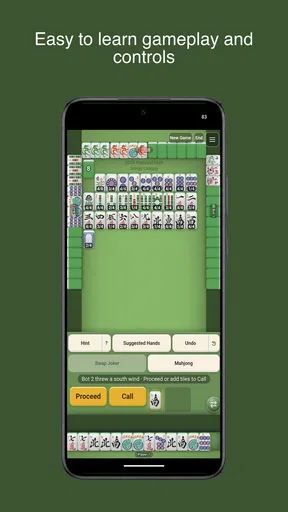
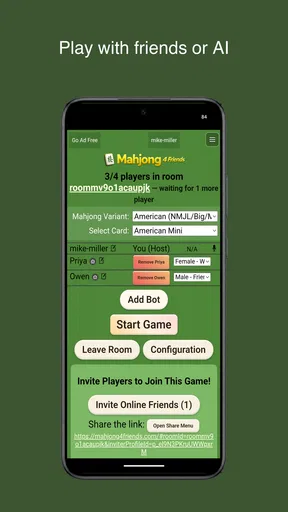
I keep coming back to Mahjong 4 Friends: Multiplayer for one simple reason: it treats mahjong as a social board game rather than a solitary matching puzzle. That distinction matters. Instead of asking me to clear identical tiles on my own, it puts the focus on a four-player table, with the choice of playing with friends or against AI. In my experience, that makes each session feel closer to sitting down for a proper game night, even when everyone is playing from separate places.
Developed by Unwind Media, this free board game is aimed at players who want American and Chinese Mahjong in a multiplayer format. It is rated for Everyone, so it is approachable for families and casual groups, while the underlying rules still give experienced players plenty to think about. The app has earned a 4.7 average from around 1.8 thousand ratings, and its audience has passed the 100 thousand install mark. Those figures suggest a healthy player base without making the game feel like an anonymous, crowded service.
The multiplayer table is the real reason to install it
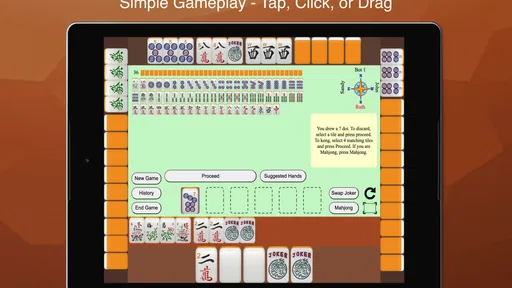
The central capability here is the ability to play mahjong with other people instead of treating the tiles as a purely visual puzzle. That changes the rhythm completely. A solo matching game is usually about pattern recognition and speed; a multiplayer mahjong table is about reading the situation, choosing when to commit, and noticing what other players may be collecting. The app’s value comes from making that shared decision-making available on a phone or tablet.
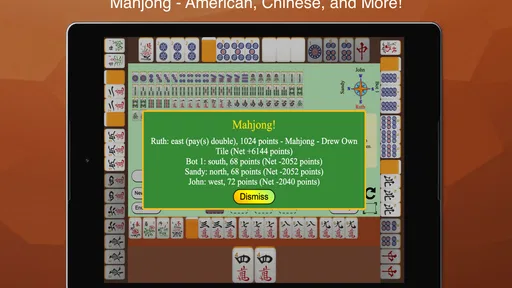
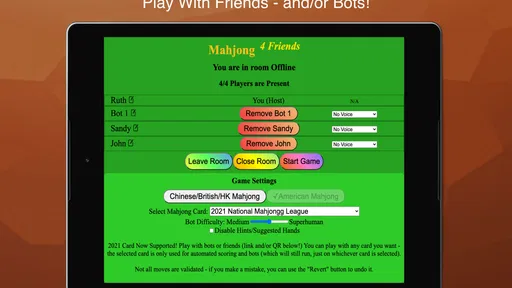
I especially like the flexibility between American and Chinese Mahjong. These are not simply two visual themes for the same activity. They represent different rule traditions and expectations, so having both in one game gives players a useful way to find the style that suits their group. If your friends already have a preferred version, that choice can prevent the awkward first few minutes of arguing over which rules everyone is supposed to follow.
The multiplayer focus also makes the app more useful for people who are learning. Watching a real opponent discard a tile can teach more than repeatedly solving a basic puzzle alone. You start to notice that a tile is not valuable only because it completes your own hand; it may also reveal information about what others are avoiding or pursuing. That kind of awareness develops naturally when the table has other decisions happening around you.
There is an important distinction between playing with friends and playing with AI. Friends bring conversation, hesitation, bluffing, and unpredictable choices. AI gives you a more convenient practice partner when nobody else is available. I would not treat those modes as interchangeable. The computer option is useful for learning the flow and keeping the game available, while a private match with people you know is where the social promise of the app is strongest.
For someone who has only encountered Mahjong as a tile-matching pastime, the multiplayer format may initially feel more demanding. That is not a flaw, but it does mean the app is better approached as a board game than as a quick reflex diversion. You need to be willing to learn what the tiles mean, follow a hand as it develops, and accept that a good decision may not produce an immediate reward.
Worth Reading Before You Choose

EA SPORTS FC Mobile 26 Is a Bigger Football Game, but It Takes Time

Flipboard Shows What News Apps Must Do Beyond the Feed

Switching to Android Auto Means Rethinking Your Driving Routine

Google Calendar Makes a Crowded Week Easier to Manage

Ludo King Makes the Most of the Minutes Between Plans

Baby Panda World Brings Quick Play to Modern Phones, but Its Game Library Feels Busy
What a session feels like in everyday use
My preferred way to use it is as a planned short game with people who already know they want to play. A group chat message, a few minutes to settle on the rule style, and then the phone becomes the table. This works particularly well when friends live in different cities or when arranging a physical game night is unrealistic. The app does not need to replace an actual table; it simply makes the same kind of shared activity easier to arrange.
The AI option changes the experience in a practical way. If I have time for a game but cannot gather enough people, I can still work on tile recognition and decision-making. That makes the app less dependent on everyone’s schedule than a strictly human-only multiplayer title. It also gives a new player a lower-pressure place to become familiar with the interface before joining friends who already know what they are doing.
I would recommend starting with the version of Mahjong your group understands best rather than trying to learn both at once. Switching between American and Chinese Mahjong too early can blur the differences and make every unfamiliar result seem like an app problem. Once the basic flow feels comfortable, comparing the two styles becomes much more rewarding because you can see how the rule structure affects your choices.
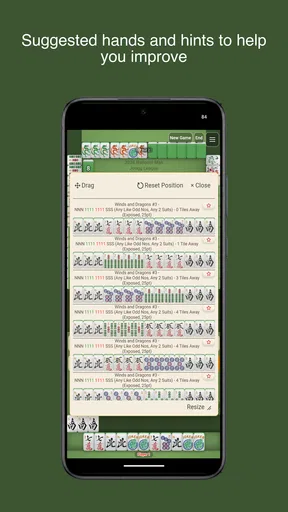
One useful habit is to treat the first few sessions as observation exercises. Instead of chasing every possible combination, I pay attention to which discards seem safe, how quickly the table changes, and whether my hand is becoming too narrow. This is one of the less obvious strengths of a multiplayer app: it lets you practice the mental part of Mahjong, not just remember tile names. The value comes from reviewing why a choice worked or failed, even if the game itself does not turn that lesson into a formal tutorial.
Another practical tip is to agree on the rule style before inviting less experienced players. A casual friend may be happy to play either version, but that does not mean they will enjoy discovering the differences halfway through a hand. A quick explanation at the start makes the session feel welcoming instead of making the newcomer feel as though they missed an instruction screen.
The best scenario is a remote game night
The strongest use case is a small group of friends who want a genuine board-game interaction but cannot meet in person. Imagine four people finishing work at different times, opening a group call, and using the app as the shared activity. The game gives the conversation a structure: players have something to discuss between turns, something to react to, and a reason to stay engaged rather than drifting into separate scrolling habits.
That scenario also shows why the distinction between friends and AI matters. AI can fill empty seats and help you practice, but it cannot recreate the teasing, surprise, and shared memory of a close friend making an unexpected discard. If your goal is companionship, invite people. If your goal is repetition and skill-building, use the computer. Thinking of the two modes as serving different purposes helps set realistic expectations.
The app should also work well for a family that already plays Mahjong but wants a convenient alternative when the physical set is unavailable. The Everyone rating makes it easier to consider for mixed-age households, although I would still explain the rules rather than assuming a younger player will understand the strategic side immediately. The visual format may be approachable, but Mahjong itself rewards patience and attention more than instant familiarity.
It is less convincing as a throwaway game for a two-minute wait. A full board-game session asks for concentration, and interruptions can make it harder to remember what has been discarded or what your opponents may be holding. If you want something that can be paused and forgotten without consequence, a simple tile-matching game is probably a better fit. This app earns its place when you are ready to participate, not merely tap through spare seconds.
For a newcomer, I would use the AI games to build confidence, then invite one patient friend rather than joining a highly competitive group immediately. That progression reduces the social pressure and lets you ask questions while learning. It also reveals whether you enjoy Mahjong’s strategic pace at all. Some players love the gradual construction of a hand; others prefer games where every turn produces a more obvious action.
The tradeoffs behind the shared-table design
The biggest tradeoff is depth versus immediacy. Multiplayer Mahjong offers more meaningful decisions than a basic matching game, but it also asks more from the player. You cannot rely only on spotting identical tiles. You need to understand the current hand, consider the information revealed by discards, and accept that a cautious move may be better than an exciting one. That learning curve is worthwhile for board-game fans, but it may frustrate anyone expecting a very casual puzzle.
The two rule traditions are another advantage that can become a source of friction. Choice is valuable only when players know what they are choosing. A group that casually mixes expectations may find itself debating whether a move is legal or whether a particular hand should count. I see this as a reason to establish the format before play, not as a reason to avoid the app. Clear expectations protect the social part of the session.
Playing against AI is convenient, but convenience is not the same as human variety. A computer opponent can keep a game moving and give you practice, yet it cannot provide the same uncertainty as a friend whose habits you know only vaguely. If you install the game expecting an endless stream of lively human tables without arranging any social contact, the experience may feel quieter than anticipated.
There is also a financial consideration. The game is free to install, while optional in-app purchases range from $0.99 to $19.99 per item. I would begin without buying anything and decide whether the core table experience already fits my routine. That approach is especially sensible for a group, because the app’s main appeal is the game itself and the people around it, not the assumption that spending is required before the first enjoyable session.
The free entry point is helpful, but players should still pay attention to how optional purchases fit their own habits. Someone who is comfortable using a free game occasionally may never feel pressure to spend. Another player who dislikes any extras inside a board-game app may prefer a paid alternative with a simpler purchase model. Neither preference is wrong; it depends on whether convenience and access matter more to you than having a completely fixed-cost experience.
Compared with traditional Mahjong apps that concentrate on solo puzzles, this one is more appealing when the social table is the priority. Compared with a physical set, it is easier to arrange remotely and does not require a table full of tiles, but it loses some of the tactile pleasure of shuffling and handling them. Compared with a general online board-game platform, its narrower focus may be a benefit: you are not browsing dozens of unrelated games when what you want is specifically Mahjong.
Who gets the most from this Mahjong game?
I think the best audience is made up of people who already enjoy board games, want to learn Mahjong properly, or have a regular group looking for a remote activity. The multiplayer design gives experienced players a convenient place to meet, while the AI mode lowers the barrier for someone who needs practice before playing publicly. The combination is more useful than either mode would be alone.
It is also a good choice for a player who wants to compare American and Chinese Mahjong without maintaining separate apps. That comparison can make the game feel like a small learning project rather than a single repetitive pastime. I would still recommend mastering one style first, because understanding the strategic identity of each version is more satisfying than moving between them without a clear foundation.
On the other hand, I would skip it if my ideal mobile game is fast, silent, and instantly understandable. I would also look elsewhere if I wanted a highly tactile experience, a broad catalog of board games, or a session that demands almost no concentration. The app’s strengths are tied directly to its focus, and that focus will not suit every kind of mobile player.
Its Everyone content rating makes it broadly approachable, and the free price makes trying it low-risk. Still, “easy to access” should not be confused with “easy to master.” A new player may need several games before discards, hand-building, and the differences between rule styles begin to feel natural. I consider that a fair exchange for a game with more lasting depth than a simple matching puzzle.
Unwind Media has positioned the game around a clear idea: bring American and Chinese Mahjong to a shared digital table, with friends or AI available depending on the situation. That idea works best when I use the app deliberately—choosing a rule style, inviting the right people, and treating early games as practice rather than tests of expertise. The result is more rewarding than opening it at random and expecting instant entertainment.
After spending time with it, my recommendation is straightforward. Install it if you want a focused Mahjong experience that can support a remote game night and still give you a way to practice alone. Start with the free version, use AI to learn the flow, and agree on the rules before playing with friends. If you want a quick matching diversion or a full physical-table substitute, another option may serve you better. For anyone who values the decisions and conversation around a board game, however, Mahjong 4 Friends: Multiplayer makes a convincing case for keeping a digital Mahjong table close at hand.
Pros
- Supports private games with friends and family.
- Simple rules make it approachable for casual players.
- Multiplayer format adds a social layer to classic Mahjong.
- Suitable for short sessions on mobile devices.
- Useful option for players seeking a traditional board-game feel.
Cons
- Finding opponents may take time during quieter hours.
- The interface can feel dated on some devices.
- New players may need time to learn Mahjong terminology.
- Online play depends heavily on a stable internet connection.
- Limited appeal if you prefer solo games or faster-paced puzzles.
FAQs for Mahjong 4 Friends: Multiplayer
What is Mahjong 4 Friends: Multiplayer?
Mahjong 4 Friends: Multiplayer is a digital Mahjong game focused on playing with other people online. It is designed for users who enjoy traditional tile-based strategy and want to compete or play casually with friends and other players. Before downloading, remember that the experience depends heavily on an active internet connection and on finding available opponents or inviting people you know.
Can I play Mahjong 4 Friends: Multiplayer with friends?
Yes, the main appeal of Mahjong 4 Friends: Multiplayer is its social experience. Players can generally create or join multiplayer games and invite friends to participate, making it suitable for private matches and casual competitions. However, the exact options for invitations, rooms, or matchmaking may depend on the current version, so checking the in-game menus after installation is recommended.
Is Mahjong 4 Friends: Multiplayer suitable for beginners?
The game can be suitable for beginners, but new players should understand that Mahjong has several rule sets and scoring systems. The app may provide a straightforward way to play, yet it does not necessarily replace a complete lesson on every regional variation. Beginners should review the available instructions, practice patiently, and confirm which Mahjong rules the game uses before joining competitive matches.
Does Mahjong 4 Friends: Multiplayer require an internet connection?
Because Mahjong 4 Friends: Multiplayer is built around online matches, an internet connection is normally required for its multiplayer features. Playing over Wi-Fi or a stable mobile network should provide a smoother experience, while weak connectivity may cause delays, disconnections, or problems joining a room. Users looking for a fully offline Mahjong game should verify whether the installed version includes any solo mode.
Is Mahjong 4 Friends: Multiplayer free to download and play?
The application may be available to download without an upfront purchase, but users should check its store listing for the latest information about advertisements, optional purchases, subscriptions, or other limitations. Free access does not always mean every feature is unrestricted. Before starting a match, review the app’s payment details and privacy permissions so you know what to expect.


